Loading...
First Round of Abstract Submission Ends: Dec 31, 2026
Extended Early Bird Ends: Jun 28, 2026

Plenary Speakers

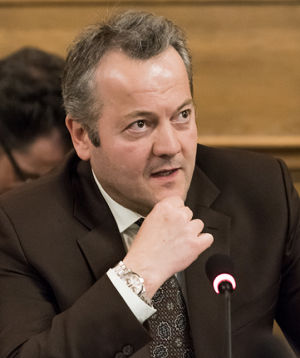
Prof. Adnan Ibrahimbegovic
University of Technology Compiegne, France
Title: Synergy of mechanics and stochastics and digital twin technology in quantifying safety and durability of civil engineering structures
Professor Classe Exceptionnelle, Member Senior of IUF and Chair for Computational Mechanics at University of Technology Compiègne, an engineering school and a member of Alliance of Sorbonne Université. He has obtained his engineering education in Sarajevo, PhD at the University of California Berkeley, USA and Habilitation at the University Pierre and Marie Curie in Paris, France. He has held professorships and research positions at four different universities (including UC Berkeley, USA; EPFL, Switzerland; ENS-Cachan, France and currently UTC, France). He is the past Chairman of ENS-Cachan Teaching and LMT-Cachan Research Departments and Head of Master Program MaiSE. He has received: IACM Fellow Award, Humboldt Research Award for Germany, Research Award for Slovenia, International Fellow NSERC Award for Canada, ‘Claude Levy-Strauss’ Chair for Univ. Sao Paulo, Brazil, ‘Asgard’ Chair for NTNU, Norway, ‘Hôte Académique’ Award for EPFL, Switzerland. He has produced 10 textbooks and monographs and over 700 publications, including 250 papers in scientific journals; link: https://ibrahimb.pers.utc.fr/
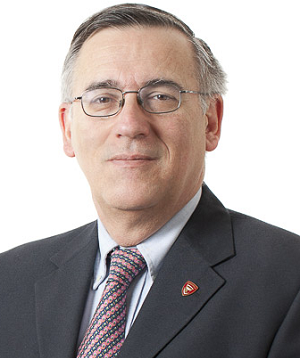
Prof. Theodore Stathopoulos
Canada
Title: Will Update
Theodore (Ted )Stathopoulos is currently Professor at Concordia University, Montreal, Canada. His research in the area of wind effects on buildings and their codification has been influential in the development of codes and standards around the world. He has an extensive publication record with more than 500 articles in refereed journals and conference proceedings. He is a member of the ASCE 7 Committee on Minimum Wind Loads, the respective committee of the Canadian Code; and the convener of the ISO committee on wind loads on buildings. He is a Fellow of the Canadian Academy of Engineering, the Institution of Civil Engineers and the American Society of Civil Engineers, and its Structural Engineering Institute. He is the Editor of the Journal of Wind Engineering and Industrial Aerodynamics. He has been appointed Distinguished Professor in Building Physics, Urban Physics and Wind Engineering by the Technical University of Eindhoven, The Netherlands; and Yang Hua Distinguished Chair Professor of the Southwest Jiatong University, Chengdu, China. He has received an Honorary Doctorate from the Aristotle University of Thessaloniki, Greece; and another one from the Technical University of Eindhoven, The Netherlands.
Prof. Kyriazis Pitiliakis
Aristotle University of Thessaloniki, Greece
Title: Will Update
Will Update
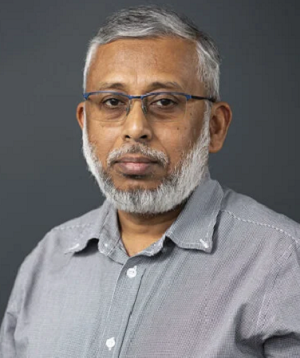
Prof. Faiz Shaikh
Australia
Title: Development of lithium refinery residue based geopolymer binder for sustainable concrete
Prof. Faiz Shaikh received his Ph.D. degree in civil engineering from the National University of Singapore (NUS) in 2005. Since 2009, he has been with Curtin University, Australia. He is a Chartered Professional Engineer (CPEng.) of Australia, Fellow of Engineers Australia (FIEAust) and a member of the Concrete Institute of Australia. Among many research interests, the sustainable use of various industrial by-products in low-carbon concrete and fibre reinforced cementitious composites, industrial by-products based geopolymer binder, pavement material, etc. are the research areas where he has contributed in terms of research publications, industry collaboration, training/mentoring of young engineers and success in research funding. He has completed various research projects on the utilization of fly ash, blast furnace slag, ferro-nickel slag, lithium refinery residue and silica fume as partial replacement of cement in concrete; construction and demolition wastes, recycled glass aggregates, waste tyres crumb rubbers, copper heap leach residue as aggregates in concrete; and development of geopolymer concrete using fly ash or fly ash-slag blend or lithium refinery residue-fly ash. He has supervised 14 PhD and 3 MPhil students and is currently supervising 3 PhD students. He has about 233 refereed publications including two books published in Springer and Elsevier, six book chapters, 223 reviewed journal papers in his credit. He also holds an h-index of 73 and total citations of about 17,000+ according to Google scholar.
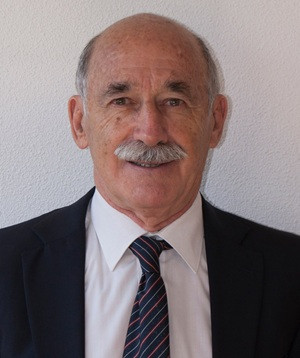
Prof. Pinnaduwa Kulatilake
Christian Brothers University, USA and Professor Emeritus, University of Arizona, USA
Title: Current Status of Rock Mass Strength
Dr. Pinnaduwa H.S.W. Kulatilake is a Professor of Civil Engineering at the Christian Brothers University, USA. He is a Professor Emeritus at the University of Arizona, USA. He is a recipient of 2024 International Society for Rock Mechanics and Rock Engineering (ISRM) Science Achievement Award. Currently, he serves as the Chair of the ISRM Commission on “Estimation of Rock Mass Strength and Deformability”. Since October 2022, he has been serving as the president of the Sri Lankan Society of Rock Mechanics and Engineering. His Ph.D. degree is in Civil Engineering with a Geotechnical Engineering specialty from the Ohio State University, USA. Recently he served as a Distinguished Professor of Rock Mechanics and Rock Engineering for three years (May 2019 - May 2022) at a University in China under the Distinguished Foreign Expert 1000 Talent Program funding from both the Chinese Government and a Province in China. Prof. Kulatilake has over 45 years of experience in rock mechanics & rock engineering and applications of probabilistic, statistical, and numerical methods to civil, mining, and geoengineering.

His teaching has gone beyond the universities he has worked at. He has taught 56 short courses to both practitioners and academicians in 17 countries covering all 6 continents. He has organized and run four successful international conferences as the Chair (two in Sri Lanka, one in the US, and the most recent one in Peru in Dec. 2024). The two most recent ones (Dec. 2023 and Dec. 2024) were ISRM Specialized Conferences. Currently, as the Chair of the Conference, he is organizing the Second ISRM Commission Conference on Estimation of Rock Mass Strength and Deformability to be held in Sri Lanka during July 9-11, 2026.

He has performed research with 95 graduate students and visiting scholars to earn worldwide recognition for his research. He has published more than 280 papers. These papers have resulted in more than 9365 Google Scholar Citations with an H-index of 56 and an I10-index of 120. He has co-authored a book on “Rock mass stability around underground excavations in a mine” He has edited five conference proceedings and served as the Guest Editor for two special issues in an international journal. All those activities led him to deliver more than 40 invited keynote lectures and 50 other invited lectures throughout the world. He is a recipient of more than 10 prestigious awards including two Peter Cundall Awards.

His research accomplishments resulted in securing invited and elected positions on the editorial boards of several journals. He receives invitations from more than 30 geoengineering journals to review technical papers. He has been a research proposal reviewer for many US and international granting agencies. He has been a Visiting Professor/ research fellow at several top geomechanics institutes in the world. He is a registered professional civil engineer. He has served for over 20 years as the primary or sole examiner for the geological engineering professional exam conducted by the Arizona State Board of Technical Registration. He has served as an external evaluator for promotion and tenure applications of faculty for several universities in the USA as well as outside the USA. He also has served and as an examiner for foreign Ph.D. Dissertations for several countries.
Prof. Jia-Qian Jiang
Glasgow Caledonian University, UK
Title: To be confirmed
Will Update
Prof. Amin Hammad
Canada
Title: AI Applications in Construction Engineering and Management
Dr. Amin Hammad is a Full Professor at Concordia University, Montreal, Canada. He is the Director of the Cyber-Physical Construction and Infrastructure Systems Lab and the Associate Director of the Center of Innovation in Infrastructure Engineering and Management (CICIEM) at Concordia University. Before joining Concordia, he held faculty and visiting positions at Nagoya University, Carnegie Mellon University, the University of Pittsburgh, and the University of Tokyo. His research is recognized internationally in automation in construction and infrastructure management systems using advanced methods in remote sensing, simulation, optimization, machine learning, and robotics. Hammad has several successful collaborative research projects with the industry. He has edited one book, published eight chapters, and written about 350 papers in top peer-reviewed journals and conferences. He has supervised over 75 graduate students and PDFs at Concordia and at Nagoya University in Japan.
Prof. Konstantin Kovler
Technion – Israel Institute of Technology, Israel
Title: Low-contaminant” construction materials made from industrial by-products: How low is low enough
PhD in Structural Engineering from Moscow State University of Civil Engineering (1986). Has been affiliated with the Technion – Israel Institute of Technology since 1991. His research focuses on durability of building materials, recycling of industrial residues in construction, and the radioactivity of building materials including radon mitigation.

He has served as editor for two international journals: Materials & Structures and Cement & Concrete Composites, and has guest-edited special issues for the Journal of Environmental Radioactivity and Construction & Building Materials. Fellow (2006) and Honorary Member (2022) of RILEM – the International Union of Laboratories and Experts in Construction Materials, Systems and Structures. He also serves as Co-Chair of the Working Group “NORM in Building Materials” under the European NORM Association (ENA).

Has organized several international conferences, including Early Age Concrete (EAC’1 in 2001 and EAC’2 in 2017), and Concrete Durability & Service Life Planning (ConcreteLife-2006, ConcreteLife-2009, and ConcreteLife-2020). Co-organized the symposium “Use of By-Products in Construction: Dealing with Natural Radioactivity” (Rome, 2017), and has actively participated in multiple European concerted research actions related to construction materials and environmental sustainability.

Prof. Kovler has lectured in PhD courses across Australia, China, Denmark, Mexico, North Macedonia, Russia, Slovakia, and Israel. Chaired six standardization committees within the Israeli Institute of Standards, and serves as Israel’s national representative to the ISO Technical Committee on Radiological Protection.

In 2013, he coordinated an academic consortium aimed at establishing a National Research Center for Recycling of Materials. He is the author of seven patents, 124 peer-reviewed journal articles, 102 conference papers, and 36 books and book chapters.

Prof. Kovler combines teaching and research activities with consulting for the construction industry and governmental ministries. Consulted on strengthening technology and materials durability of the 20-km dike under brine attack (Dead Sea Works Ltd., Israel, 2011-2012), on concrete technology of high-strength concrete (first time in Israel) for 54-storey building in Tel-Aviv, Sarona Project, (WXG Ltd., Israel, since 2013). Official consultant of the Israeli Port Authority on concrete technology for marine structures and durability in Hamifratz Port Terminal, Haifa, and Hadarom Port Terminal, Ashdod (since 2012), and of Israel Electric Corporation (since 2019). In 2018, together with experts from the Israel Society of Radiation Protection, he publicly criticized a proposed national radiation law, contributing to its withdrawal from parliamentary discussion. He is a member of the Advisory Board of Airovation Technologies (https://www.airovation-tech.com/) dealing with carbon capture utilization and storage enabling methane based low carbon hydrogen production in synergy with hard-to-abate industries such as: fertilizer, concrete and steel.